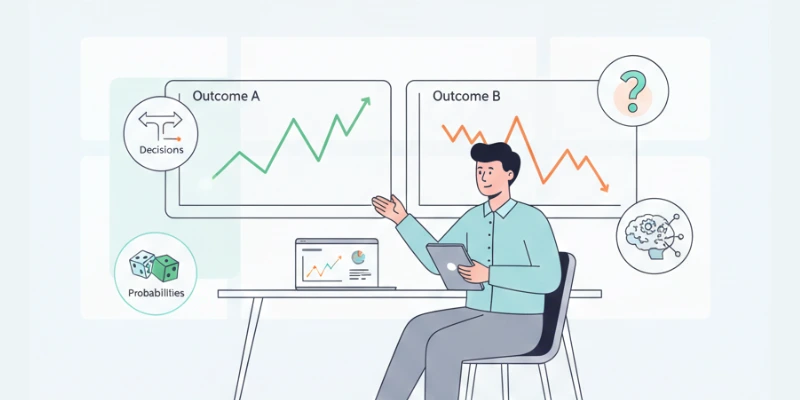
Hypothesis testing is one of the most important ideas in data science. It helps us decide whether an assumption about data is likely to be true or not. Many learners feel intimidated because hypothesis testing is often taught using heavy formulas and symbols. In reality, the core idea is simple and logical. It is about asking a clear question and using data to support or reject an assumption.
Once this mindset is clear, the technical details become much easier to handle. If you are beginning your learning journey and want structured guidance, enroll in the Data Science Course in Trivandrum at FITA Academy to build strong fundamentals with clarity and confidence.
What a Hypothesis Really Means
A hypothesis is simply a statement that can be tested using data. It usually reflects a belief or assumption about a population. In hypothesis testing, there are two main statements. One assumes that nothing has changed or no effect exists. The other assumes that a meaningful difference or effect is present. These statements help frame the problem clearly. Instead of guessing outcomes, hypothesis testing allows decisions to be based on evidence. This approach is what makes data science reliable and practical in real-world scenarios.
Why Hypothesis Testing Matters in Data Science
Data scientists work with uncertainty every day. Business decisions, product changes, and experiments often rely on incomplete information. Hypothesis testing provides a structured way to reduce uncertainty. It helps answer questions like whether a new feature improves performance or whether observed changes happened by chance. Without hypothesis testing, decisions may rely on intuition alone. Using this method ensures that conclusions are supported by data rather than assumptions.
Understanding Significance Without Heavy Math
One of the most confusing parts of hypothesis testing is statistical significance. At its core, significance measures how likely it is to observe results if the initial assumption were true. A very unlikely result suggests that the assumption may be incorrect. This idea does not require advanced mathematics to understand. It is similar to being surprised by an unexpected outcome. Learning this intuition makes hypothesis testing far more approachable. If you want to strengthen your understanding through hands-on practice, taking up a Data Science Course in Kochi can help you connect theory with real datasets and practical examples.
Common Mistakes Beginners Make
Many beginners misunderstand hypothesis testing as a way to prove something with absolute certainty. In reality, it only measures likelihood. Another common mistake is focusing only on results without checking the assumptions behind the test. Poor data quality or biased samples can lead to misleading conclusions. It is also important not to blindly trust outcomes without understanding context. Developing critical thinking alongside technical skills is essential for applying hypothesis testing effectively.
Applying Hypothesis Testing in Real Projects
In real-world projects, hypothesis testing is often used during experiments and analysis phases. It helps validate insights before taking action. Marketing campaigns, healthcare studies, and product improvements rely on this method regularly. Clear problem definition and thoughtful interpretation are more important than complex calculations. As experience grows, confidence in using hypothesis testing also increases naturally.
Hypothesis testing does not need to be overwhelming. When approached conceptually, it becomes a powerful decision-making tool rather than a mathematical burden. Understanding the logic behind assumptions, evidence, and conclusions is what truly matters. With consistent learning and practical exposure, anyone can master this core data science concept. If you are ready to deepen your skills and apply these ideas professionally, consider signing up for the Data Science Courses in Dindigul to strengthen your data-driven thinking and career growth.
Also check: Dealing With Outliers and Anomalies in Your Dataset